
ABOUT

GSC Engineering & GEO Consultants

Our vision is to reach the highest level and full potentials to become the most companies in demand for qualified site investigation work through principled and ethical behavior, state of the art technology, properly equipped, highly qualified and skilled manpower.

Realization of this vision means progress in every aspect of our administration technical and human skills to provide highly optimized services to ultimately gain and maintain the trust and satisfaction of our clients.

We continuously strive to improve and develop our values and principles to have a qualified staff with strong work ethic, dependability and responsibility, positive attitude, high spirit of cooperation, adaptability, honesty and integrity, self–motivation, enthusiasm to grow and learn, strong self–confidence, excellent professionalism and loyalty. By being mindful and committed to these values, we uphold our policy to the clients, environments and societies to exhibit professional behavior at all times.

Professional behavior of our staff includes learning every aspect of a job, doing it to the best of one’s ability and providing a positive role model for others. Our professionals look, speak, and dress accordingly to maintain an image of someone who takes pride in their behavior and appearance.

Our professionals complete projects as soon as possible and avoid letting uncompleted projects pile up. They complete high quality work and are detail oriented. Our professionals are enthusiastic about their work and optimistic about the company and its future.
Our continuous commitment to our vision is the way to a successful efficient work.

Company Profile

GSC Future

Mission

Our mission is to deliver precise, reliable, and innovative investigation services that empower clients to make informed decisions. We achieve this through advanced technologies, skilled professionals, and an unwavering commitment to safety, integrity, and sustainable practices—ensuring every project builds stronger foundations for the future.

Vision

Our vision to be the trusted global partner in site investigation and geophysical solutions, recognized for transforming complexity into clarity and for setting the benchmark in technology, ethics, and professional excellence.

Goal

Our goal is to continuously elevate the standards of site investigation by combining innovation, advanced technologies, and professional expertise to deliver services of uncompromising quality. We aim to cultivate a highly skilled and ethical workforce, foster lasting trust with our clients, and ensure every project is executed with precision, transparency, and responsibility. Through this commitment, we strive not only to lead our industry but also to create a positive impact on the communities and environments we serve.

GSC Moments

Behind the Scenes, Beyond the Surface

GSC Numbers

Proven Impact, Measured in Numbers

30
Expert Workers
115
Happy Clients
560
Completed Projects
30
Running Projects

GSC FAQ

Got Questions? We’ve Got Answers

Why Geophysics is important for construction fields?

It can help identify the condition of the strata, soil, and foundation. It is particularly useful for shallow constructions where the underground amenities are not known1. Geophysical testing can be highly effective in studying the condition of the strata, soil, and foundation. The testing system will prove helpful in identifying the profile of the soil and the bedrock .

Can It be beneficial to use BIM modeling in architecture?

Yes, it can be beneficial to use Building Information Modeling (BIM) in architecture. BIM enables architects to gain greater project insights early on in the construction. BIM’s detailed three-dimensional view of the project along with sequencing and cost estimation capabilities allows architects to revisit and revise plans if needed. With BIM, architects are better positioned to enhance collaboration and productivity while keeping costs under control1. BIM modeling enables a completed building and all its related MEP services and systems to be visualized on screen before ground is broken on the construction site. This information allows better planning and design that takes best advantage of available space and resources.

Which method is suitable for tracking utilities?

Ground-penetrating radar (GPR) is one of the most common methods used for tracking underground utilities. GPR uses high-frequency pulses to detect subsurface features such as pipes and cables. Other methods used for locating underground utilities include electromagnetic utility tracking, vacuum excavation, and dowsing.

Are DH methods capable of giving us engineering parameters?

Downhole methods are capable of giving us engineering parameters. For example, a system capable of operating in downhole conditions at depths of several thousand meters is developed for measuring drilling engineering parameters (DEP) in real time. The aim is to monitor DEP during drilling, including the weight on the drill bit (WOB), torque on the drill bit (TOB), and lateral force on the drill bit.

Is MASW method necessary before drilling or building?

The Multichannel Analysis of Surface Waves (MASW) method is a seismic exploration technique that evaluates ground stiffness by measuring shear-wave velocity (Vs) of subsurface in 1-D, 2-D, and 3-D for various types of geotechnical engineering projects1. It is a seismic method that uses surface waves to estimate shear wave velocities (V s)2. The MASW method deals with surface waves in the lower frequencies (e.g., 1–30 Hz) and uses a much shallower depth range of investigation (e.g., a few to a few tens of meters).

For archaeological studies, why is GPR so important?

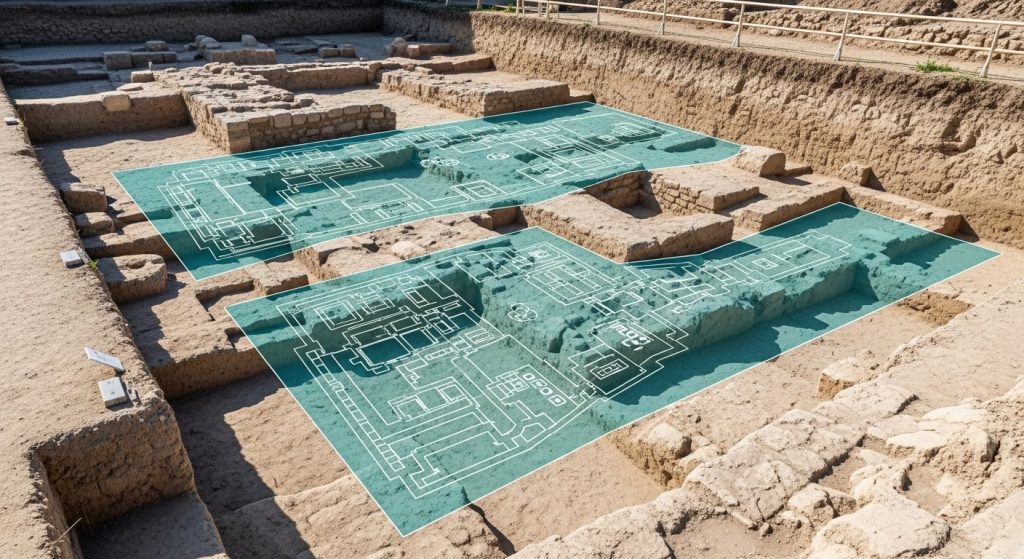
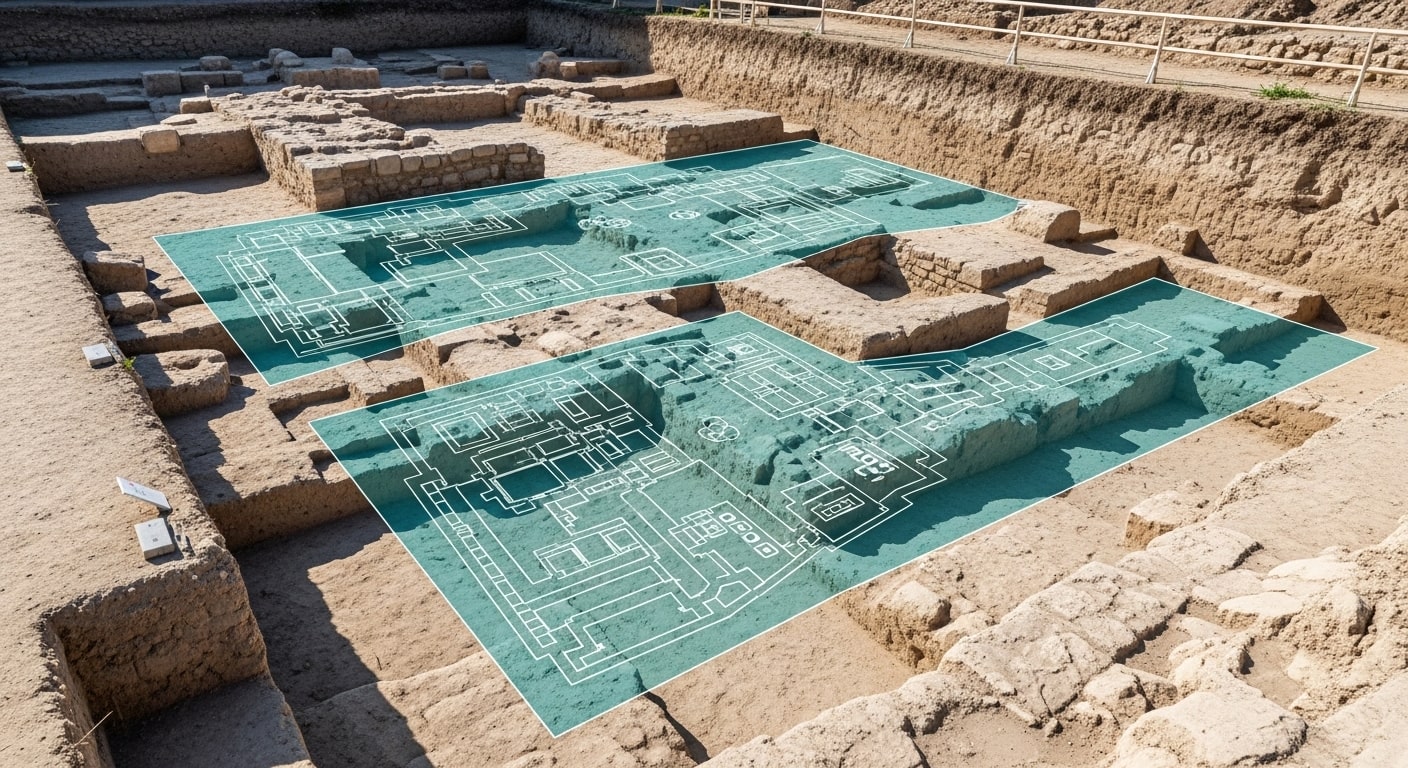
Ground-penetrating radar (GPR) is important for archaeological studies because it can help identify subsurface features without the need for excavation. GPR can detect buried objects and structures such as walls, foundations, and artifacts. It can also help identify changes in soil composition and stratigraphy that may indicate the presence of archaeological features. GPR is a non-invasive method that can be used to map subsurface features without disturbing the site. This makes it an ideal tool for archaeological studies where preservation of the site is important.

What are the possible uses of ERT for soil problems?

Electrical Resistivity Tomography (ERT) is useful for soil problems because it can help identify subsurface features such as water content and saturation changes over time. ERT can also be used to monitor plant and soil water relations, It is also capable of detecting settlements and hazardous soil conditions.

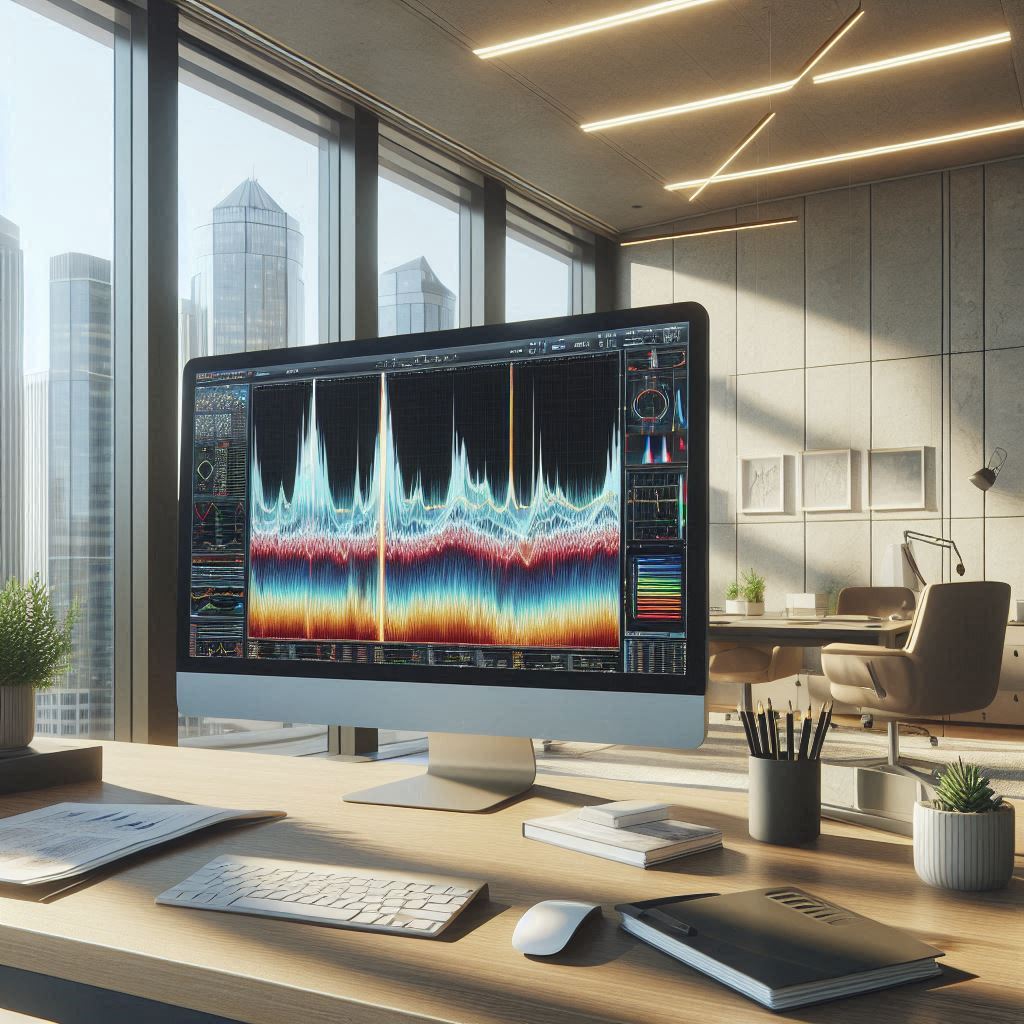
How do you processed & Reprocessed deep seismic data in your software?

1-Pre-processing: Involves filtering, noise reduction, and calibration to enhance the quality of the data.
2-Deconvolution: Helps to remove the instrument response and improve the temporal resolution of the data.
3-Data Integration: This involves correcting for variations in sensor spacing, orientation, and travel times.
4-Velocity Analysis: involves picking the arrival times of seismic waves on different traces and using this information to estimate subsurface velocities.
5-Migration: Is a mathematical process that corrects for the curvature of seismic wavefronts as they travel through the subsurface. This process helps to accurately position subsurface features in the final image.
6-Stacking: Involves summing multiple seismic traces together to improve the signal-to-noise ratio. This enhances the visibility of subsurface structures.
7-Imaging: The processed seismic data is then used to generate images of the subsurface structures. Various algorithms and techniques, such as Common Midpoint (CMP) stacking, are used to create these images.
8-Interpretation: Geoscientists and interpreters analyze the seismic images to identify subsurface features such as faults, layers, and potential hydrocarbon reservoirs.
9-Modeling and Inversion: Seismic data can also be used to build geological models and perform inversion to estimate physical properties of the subsurface, such as rock density and porosity.
10-Visualization:The final results are often visualized using specialized software that allows users to interact with and manipulate the seismic data, creating detailed maps and cross-sections of the subsurface.